
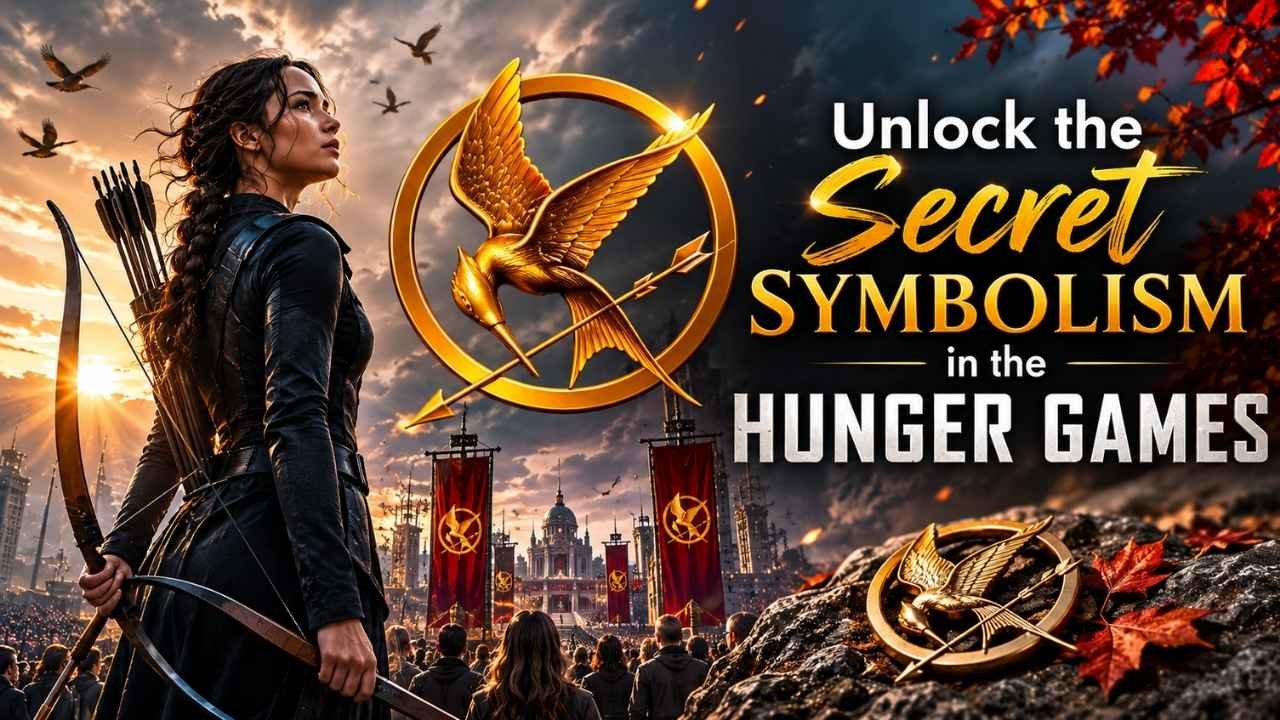
Symbolism in The Hunger Games is one of the main reasons the novel continues to inspire readers, students, and teachers around the world. Instead of using objects and characters only to move the story forward, Suzanne Collins gives them deeper meanings that connect to hope, rebellion, survival, freedom, sacrifice, and oppression.
From the famous Mockingjay to the Nightlock berries, every symbol helps explain the struggles of Katniss Everdeen and the people of Panem. Understanding these major symbols in The Hunger Games also makes it easier to see the novel’s important themes and messages.
In this guide, you’ll discover the symbolism in The Hunger Games, learn what each symbol represents, and explore how these literary symbols shape the story while leaving a lasting impact on readers.
Quick Answer
Symbolism in The Hunger Games helps readers understand the novel’s deeper message beyond its exciting story. Suzanne Collins uses symbols like the Mockingjay, fire, bread, Nightlock berries, and President Snow’s roses to represent hope, rebellion, survival, freedom, and oppression.
These major symbols in The Hunger Games reveal how people fight against fear and injustice while staying true to themselves. By exploring the literary symbolism in The Hunger Games, readers can better understand the characters, the world of Panem, and the themes that make this dystopian novel meaningful and memorable.
What Is Symbolism in The Hunger Games?
Symbolism is a literary device that gives people, objects, or actions a deeper meaning. In The Hunger Games, symbols help tell a bigger story about power, hope, and resistance. Instead of explaining every message directly, Suzanne Collins lets readers discover important ideas through symbols that appear throughout the novel. The Mockingjay, fire, bread, and the Capitol all carry meanings beyond what they seem.
These symbols in The Hunger Games make the story more emotional and thought-provoking while helping readers connect with Katniss Everdeen’s journey. Understanding the symbolism in The Hunger Games also helps students and fans appreciate the novel’s themes and the author’s creative storytelling.
Why Did Suzanne Collins Use Symbolism?
Suzanne Collins uses symbolism in The Hunger Games to make the story more meaningful and memorable. Instead of simply showing a battle between districts and the Capitol, she uses symbols to express ideas about freedom, control, hope, and social inequality. This approach encourages readers to think about real-life issues while following the characters’ journey.
For example, the Mockingjay becomes much more than a bird because it represents rebellion and unity. Symbols also help readers understand emotions without long explanations. Just as words can carry hidden meanings in modern language, abbreviations can too. If you enjoy exploring different meanings, you may also like learning about the ATP meaning here: https://symbolinsights.com/atp-meaning/.
The Most Important Symbols in The Hunger Games
The major symbols in The Hunger Games each represent an important idea that shapes the story. While some symbols appear from the beginning, others become more powerful as the novel continues. The famous Mockingjay represents hope and rebellion, while fire reflects strength, courage, and transformation.
Bread reminds readers of kindness and survival, and the Nightlock berries symbolize choice and defiance against oppression. Even President Snow’s roses carry hidden meanings connected to power and fear. Together, these literary symbols in The Hunger Games help readers understand the novel’s deeper themes instead of seeing them as ordinary objects.
The Mockingjay
The Mockingjay is the most recognizable symbol in The Hunger Games. At first, it appears as a simple pin that Katniss Everdeen wears during the Games. As the story develops, it becomes a powerful sign of hope, freedom, and resistance against the Capitol. The bird itself exists because of the Capitol’s failed experiment, making it a symbol that reminds people not everything can be controlled.
This is why many readers ask, “What does the Mockingjay symbolize in The Hunger Games?” Its meaning grows throughout the story, inspiring people across Panem to stand together. The Mockingjay shows that even small acts of courage can create lasting change.
Fire
Fire is another important symbol that represents strength, determination, and transformation. Because of her unforgettable entrance before the Games, Katniss becomes known as “The Girl on Fire.” This title reflects her brave personality and growing influence. Fire also represents the spark of rebellion spreading across Panem.
As more people lose their fear, that spark grows into a movement for change. Unlike destructive fire, this symbol focuses on hope and renewal. Many readers searching for what fire symbolizes in The Hunger Games discover that it represents courage in difficult times. Like the story itself, fire reminds us that even one small spark can inspire an entire nation.
Bread
Bread may seem like an ordinary food, but it carries a powerful meaning in The Hunger Games. When Peeta Mellark gives bread to Katniss Everdeen, he offers her more than something to eat. He gives her hope, kindness, and a reason to keep living. That simple act changes Katniss’s life and reminds readers that small gestures can make a big difference.
Throughout the story, bread also represents friendship, compassion, and the importance of helping others during difficult times. If you’ve ever wondered what bread symbolizes in The Hunger Games, it stands for humanity in a world filled with fear and violence. It proves that kindness can survive even under the harsh rule of the Capitol.
Nightlock Berries
The Nightlock berries become one of the most unforgettable symbols in The Hunger Games. At the end of the Games, Katniss and Peeta choose to eat the poisonous berries rather than kill each other. This brave decision forces the Capitol to change the rules, making it a turning point in the story. The berries symbolize choice, defiance, and the courage to stand against unfair power.
Many readers ask, what do the Nightlock berries symbolize? They show that real strength comes from refusing to accept injustice. Instead of giving the Capitol complete control, Katniss and Peeta prove that people can still make their own choices, even in dangerous situations.
President Snow’s Roses
At first glance, President Snow’s roses appear beautiful and elegant, but they hide a much darker meaning. Throughout the novel, the roses symbolize power, fear, and the Capitol’s desire to control others. Their sweet smell often covers the scent of blood, reminding readers that Snow hides violence behind a calm appearance.
This contrast makes the roses one of the most meaningful literary symbols in The Hunger Games. When people search for what do Snow’s roses symbolize, they often discover that the flowers represent manipulation rather than beauty. The roses remind readers that appearances can be misleading and that true power built on fear cannot last forever.
The Three-Finger Salute
The three-finger salute becomes a quiet but powerful act of rebellion in Panem. What begins as a simple sign of respect, gratitude, and goodbye grows into a symbol of unity against the Capitol. As more people raise their fingers, the gesture shows they are no longer willing to live in fear. It requires no words, yet everyone understands its meaning.
This is why the salute remains one of the major symbols in The Hunger Games. Like many meaningful symbols found in everyday life, small actions often carry deep messages. If you enjoy learning about symbolic signs, you may also like reading about ladybug landing on you symbolism here: https://symbolinsights.com/ladybug-landing-on-you-symbolism/.
Hidden Symbols Many Readers Overlook
Beyond the famous symbols, the novel contains many smaller details with important meanings. The Arena symbolizes how people are forced to compete for survival while others watch for entertainment. The Reaping represents fear and the loss of freedom because children are chosen without choice.
The Cornucopia reflects temptation and unequal power, as it offers valuable supplies but also great danger. District 12 symbolizes poverty, hard work, and hope despite difficult living conditions. Even Panem itself represents a society divided by wealth and control. These hidden symbols in The Hunger Games make the story richer and help readers understand the deeper messages behind every event.
How Symbols Reflect the Novel’s Main Themes
The symbolism in The Hunger Games supports every major theme in the novel. The Mockingjay represents hope and rebellion, while fire reflects courage and transformation. Bread shows kindness and compassion, and the Nightlock berries stand for freedom and choice. President Snow’s roses remind readers of oppression, while the three-finger salute represents unity and resistance.
Together, these symbols help explain important ideas like survival, sacrifice, identity, and the fight against injustice. Rather than simply telling readers these themes, Suzanne Collins lets them discover the meaning through memorable characters, objects, and events, making the novel far more powerful.
Character Symbolism in The Hunger Games
Several characters also serve as important symbols. Katniss Everdeen represents strength, hope, and the courage to challenge unfair systems. Peeta Mellark symbolizes kindness, love, and the belief that people should never lose their humanity. Rue stands for innocence and reminds readers of the lives destroyed by oppression.
Cinna represents creativity, individuality, and quiet resistance, using fashion to send powerful messages. Meanwhile, President Snow symbolizes fear, control, and the dangers of absolute power. Together, these characters add another layer of literary symbolism in The Hunger Games, showing that people themselves can become symbols capable of inspiring change.
Political and Social Symbolism
The novel is filled with political and social symbolism that remains meaningful today. The Capitol represents governments that use power, propaganda, and fear to control people. The annual Hunger Games symbolize how entertainment can distract society from injustice while keeping citizens divided. The differences between the rich Capitol and poor districts highlight social inequality and unfair systems.
Through these symbols, Suzanne Collins encourages readers to think about freedom, justice, and responsibility. Instead of focusing only on one fictional world, the story asks important questions about real societies. This deeper meaning is one reason The Hunger Games symbolism continues to be studied in classrooms around the world.
Historical and Mythological Inspirations Behind the Symbols
Many of the novel’s symbols are inspired by history and mythology. The name Panem comes from the Roman phrase “bread and circuses,” which describes how leaders distracted people with food and entertainment instead of solving real problems. The Hunger Games themselves also remind readers of ancient gladiator contests, where people fought before large crowds.
The Mockingjay reflects the idea that hope can grow from unexpected places, while themes of sacrifice and heroism connect to many classic myths. Understanding these influences helps readers see why the symbolism in The Hunger Games feels realistic and continues to connect with audiences across different generations.
How the Symbols Change Throughout the Story
One of the most interesting parts of The Hunger Games symbolism is how each symbol grows with the story. The Mockingjay begins as a simple pin but later becomes the face of an entire rebellion. Fire starts as Katniss’s public image before turning into a symbol of revolution. Bread changes from a gift of survival into a reminder of friendship and hope.
The Nightlock berries begin as poison but become a symbol of freedom and defiance. These changing meanings show that symbols are not fixed. As the characters grow and the story develops, the symbols become even more powerful and meaningful.
Lessons We Can Learn from the Symbolism in The Hunger Games
The symbolism in The Hunger Games teaches lessons that go beyond fiction. It reminds us that hope can survive difficult times, kindness can change lives, and courage often begins with one small action. The story also shows the importance of standing against oppression, protecting personal freedom, and helping others when they need support.
Symbols like the Mockingjay, bread, and the three-finger salute encourage readers to believe that ordinary people can inspire extraordinary change. These timeless messages are why the novel continues to connect with readers of all ages. Its symbols remain meaningful because they reflect challenges and values that still matter in today’s world.
FAQs
What is the main symbolism in The Hunger Games?
The main symbolism in The Hunger Games centers on hope, rebellion, freedom, and the fight against oppression. Symbols like the Mockingjay, fire, and Nightlock berries help express these ideas throughout the story.
Why is the Mockingjay important?
The Mockingjay symbolizes hope, resistance, and unity. It grows from a simple pin into the strongest symbol of the rebellion against the Capitol.
What do the Nightlock berries symbolize?
The Nightlock berries represent choice, defiance, and refusing to surrender to unfair power. They become one of the novel’s most powerful symbols of resistance.
What do President Snow’s roses represent?
The roses symbolize power, fear, and hidden violence. Their beauty contrasts with the cruelty of Snow’s rule, showing that appearances can be deceptive.
What does fire symbolize in The Hunger Games?
Fire represents strength, courage, transformation, and the growing spirit of rebellion that spreads across Panem.
Why did Suzanne Collins use symbolism?
Suzanne Collins uses symbolism to give the story deeper meaning, helping readers understand important themes like survival, freedom, justice, and hope without explaining every idea directly.
Conclusion
The symbolism in The Hunger Games is what gives the novel its lasting emotional power. Every important symbol, from the Mockingjay and fire to bread, Nightlock berries, and President Snow’s roses, helps tell a story about hope, rebellion, survival, and the fight for freedom. These symbols connect the characters, themes, and events in a way that keeps readers thinking long after they finish the book.
By understanding the major symbols in The Hunger Games, readers gain a deeper appreciation of Suzanne Collins’ message about courage, compassion, and standing up against injustice. That timeless symbolism is one reason the novel remains one of the most studied and loved dystopian stories today.
1 thought on “Unlock the Secret Symbolism in the Hunger Games ”