
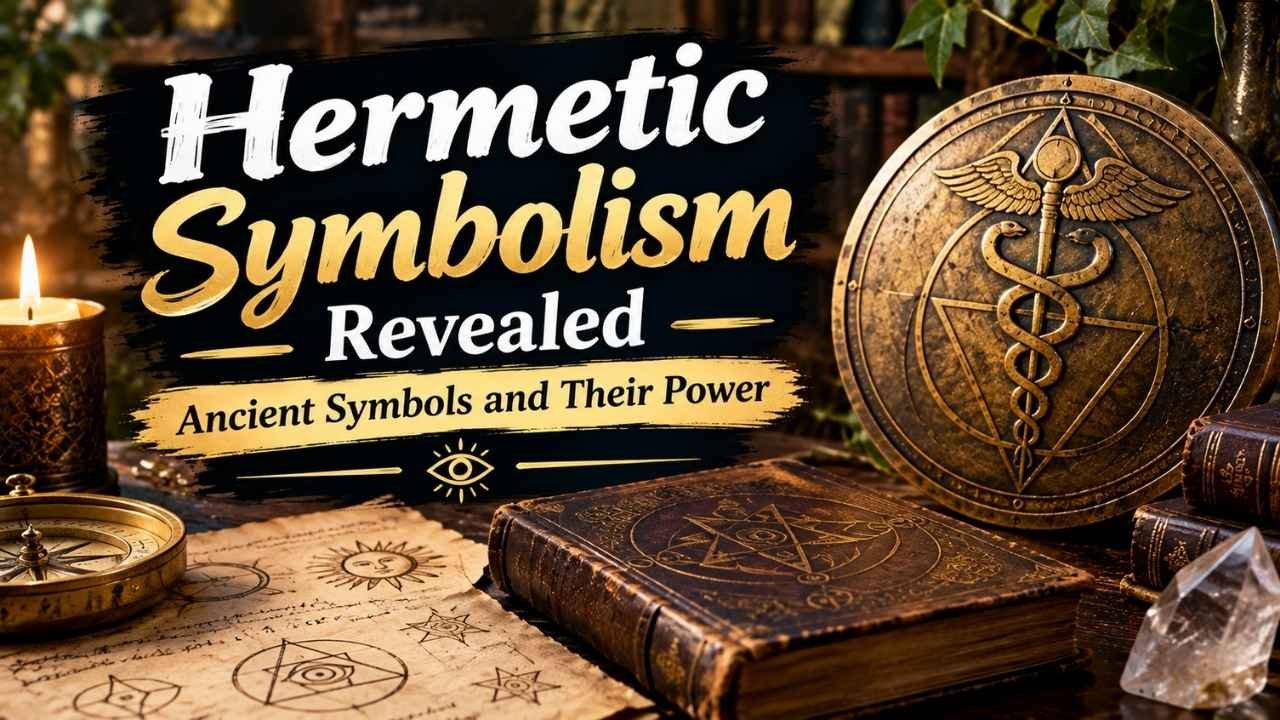
Hermetic symbolism has fascinated people for centuries because it combines ancient wisdom, spiritual symbolism, and deep philosophical ideas. Many people search for Hermetic symbols to understand their hidden meanings and how they relate to Hermeticism, alchemy, and personal growth.
Rooted in the teachings of Hermes Trismegistus, these symbols represent ideas like balance, transformation, and the connection between the human mind and the universe. From the Ouroboros and Caduceus to the Emerald Tablet, each symbol carries a unique message.
In this guide, you’ll learn what Hermetic symbolism is, explore the history of Hermetic philosophy, discover the meanings behind the most important symbols, and see how they continue to inspire spirituality, art, and self-discovery today. Everything is explained in simple language, making it perfect for beginners.
Quick Answer
Hermetic symbolism is a collection of ancient spiritual symbols connected to Hermeticism, a philosophical tradition linked to Hermes Trismegistus. These symbols, including the Ouroboros, Caduceus, and Emerald Tablet, represent ideas such as wisdom, balance, transformation, and the connection between the physical and spiritual worlds.
They also reflect the Seven Hermetic Principles, helping people explore personal growth, self-discovery, and a deeper understanding of the universe. Today, Hermetic symbols continue to inspire spirituality, art, and modern symbolic interpretation.
What Is Hermetic Symbolism?
Hermetic symbolism is a system of ancient symbols that comes from Hermeticism, a philosophical and spiritual tradition linked to Hermes Trismegistus. These symbols help explain ideas about wisdom, balance, transformation, and the connection between people and the universe.
Unlike ordinary signs, Hermetic symbols carry deeper meanings that encourage learning and personal growth. Famous examples include the Ouroboros, Caduceus, and the Emerald Tablet, each representing different parts of Hermetic philosophy. Today, people study these symbols for spiritual insight, art, and self-discovery.
If you enjoy exploring symbolic meanings in nature, you may also like our guide on Two Koi Fish Symbolism. Learning what Hermetic symbolism is gives you a strong foundation before exploring its history and teachings.
The Origins of Hermetic Symbolism
The roots of Hermetic symbolism go back to Hellenistic Egypt, where Greek and Egyptian ideas blended together. The tradition is connected to Hermes Trismegistus, a legendary figure who combines the qualities of the Greek god Hermes and the Egyptian god Thoth.
Ancient writings known as the Corpus Hermeticum introduced teachings about the mind, the universe, and divine wisdom. Over time, these ideas influenced alchemy, astrology, philosophy, and many spiritual traditions.
During the Renaissance, scholars rediscovered these texts and spread Hermetic teachings across Europe. Understanding the history of Hermetic symbolism helps explain why these ancient symbols still inspire people today and continue to appear in spiritual studies, literature, and creative works.
Core Beliefs Behind Hermetic Symbols
Every Hermetic symbol reflects an important idea rather than serving as simple decoration. The main beliefs include unity, balance, inner transformation, and divine wisdom. One of the best-known Hermetic ideas is that everything in the universe is connected.
This belief encourages people to seek harmony between their thoughts, actions, and spiritual lives. Symbols such as the Ouroboros remind us that life moves in endless cycles of growth and renewal.
These teachings also inspire people to gain knowledge through experience and self-reflection. While ancient symbols carry deep meanings, modern expressions and abbreviations also evolve over time. If you’re curious about internet slang, you can explore the meaning of LWK here.
The Seven Hermetic Principles Explained
The Seven Hermetic Principles form the heart of Hermetic philosophy. They include Mentalism, Correspondence, Vibration, Polarity, Rhythm, Cause and Effect, and Gender. One famous teaching is “As Above, So Below,” which explains that patterns in the universe often reflect patterns within ourselves.
These principles encourage people to understand both the physical and spiritual sides of life. Instead of offering strict rules, they provide a way to think about balance, change, and personal growth.
Many readers exploring Hermetic symbolism for beginners find these principles helpful because they explain the deeper meanings behind many Hermetic symbols used throughout history.
The Most Important Hermetic Symbols and Their Meanings
Many Hermetic symbols carry timeless lessons about life, wisdom, and transformation. The Ouroboros, a snake eating its own tail, represents endless cycles, renewal, and unity. The Caduceus, with two snakes around a staff, symbolizes balance, harmony, and communication.
The Emerald Tablet is famous for the phrase “As Above, So Below,” which teaches that the universe is deeply connected.
The Philosopher’s Stone stands for spiritual growth and inner perfection rather than only turning metals into gold. Sacred geometry, the Sun and Moon, and the Mercury symbol also appear in Hermetic symbolism, each reflecting balance, creation, wisdom, and personal transformation. Together, these symbols reveal the heart of Hermetic teachings.
Hermetic Symbolism in Alchemy
Hermetic symbolism played an important role in alchemy, where symbols described both physical and spiritual transformation. While many people believe alchemy focused only on making gold, Hermetic alchemists also wanted to improve the human spirit.
The Philosopher’s Stone became a symbol of wisdom, purification, and enlightenment. Other alchemical symbols represented the four elements, planets, and different stages of inner growth. These images encouraged people to remove negative habits and build a better life through knowledge and self-awareness.
This process is often called spiritual alchemy because it focuses on changing the mind and character instead of material wealth. These teachings continue to inspire students of Hermetic philosophy today.
Hermetic Symbolism in Modern Life
Although Hermetic symbolism began thousands of years ago, it still influences modern life. People use Hermetic symbols in artwork, jewelry, tattoos, meditation, and personal journals because they represent wisdom and self-discovery.
Writers, artists, and spiritual seekers often draw inspiration from symbols like the Ouroboros and Caduceus to express balance, growth, and renewal. Many readers also study Hermetic philosophy to better understand themselves and the world around them.
While these symbols hold historical meaning, people also give them personal value based on their own experiences. Their lasting popularity shows how ancient ideas can continue to inspire creativity, learning, and meaningful reflection in today’s world.
Hermetic Symbolism vs. Other Spiritual Traditions
People often confuse Hermetic symbolism with other spiritual traditions, but they are not the same. Hermeticism shares ideas with alchemy, Gnosticism, and Western esotericism, yet each has its own history and purpose. Hermetic teachings focus on wisdom, universal laws, and personal transformation through understanding the mind and the universe.
Alchemy emphasizes symbolic change and purification, while Gnosticism centers on spiritual knowledge and salvation.
Many symbols appear across different traditions, but their meanings can change depending on the context. Learning these differences helps you understand Hermetic symbols more accurately and prevents common misunderstandings about their origin and purpose.
Common Misunderstandings About Hermetic Symbols
Many people think Hermetic symbols are connected only to magic or secret societies, but this idea is incomplete. Historically, Hermetic symbolism developed as a philosophical and spiritual tradition that encouraged wisdom, self-improvement, and deeper understanding of the universe. Another common myth is that every ancient symbol belongs to Hermeticism.
In reality, many symbols come from different cultures and belief systems. It is also important to remember that symbols can have more than one meaning depending on the time, place, and tradition. Studying their historical background helps you separate facts from myths and appreciate the true purpose of Hermetic philosophy.
How to Interpret Hermetic Symbols Responsibly
The best way to understand Hermetic symbolism is to study each symbol within its historical and philosophical setting. Instead of relying on modern myths or social media posts, explore trusted sources and compare different interpretations.
Remember that Hermetic symbols often carry both literal and symbolic meanings, so avoid assuming there is only one correct explanation. Keep an open mind while respecting the tradition from which these symbols came.
As you learn more about Hermetic teachings, you will notice recurring themes of balance, wisdom, transformation, and universal connection. A thoughtful approach allows you to appreciate these ancient symbols without misunderstanding their original purpose.
FAQs
What is Hermetic symbolism?
Hermetic symbolism is a collection of ancient symbols connected to Hermeticism that represent wisdom, balance, transformation, and spiritual understanding.
Who was Hermes Trismegistus?
Hermes Trismegistus is the legendary teacher linked to Hermetic philosophy and the ancient writings known as the Corpus Hermeticum.
What does “As Above, So Below” mean?
It teaches that patterns in the universe reflect patterns within ourselves, showing the connection between the spiritual and physical worlds.
Is Hermeticism a religion?
No. Hermeticism is mainly a philosophical and spiritual tradition rather than an organized religion.
Are Hermetic symbols still used today?
Yes. Many people use Hermetic symbols in art, meditation, jewelry, tattoos, and personal spiritual practices.
Conclusion
Hermetic symbolism offers a fascinating window into ancient wisdom, Hermetic philosophy, and the search for personal transformation. From the Ouroboros and Caduceus to the Emerald Tablet, each symbol shares valuable lessons about balance, growth, and the connection between humanity and the universe.
Although these symbols began in ancient times, they continue to inspire artists, writers, and spiritual seekers around the world.
By learning their history and true meanings, you can better appreciate their lasting influence. Whether you are studying Hermetic symbols for knowledge, spirituality, or curiosity, understanding their deeper message can enrich your view of both yourself and the world around you.