
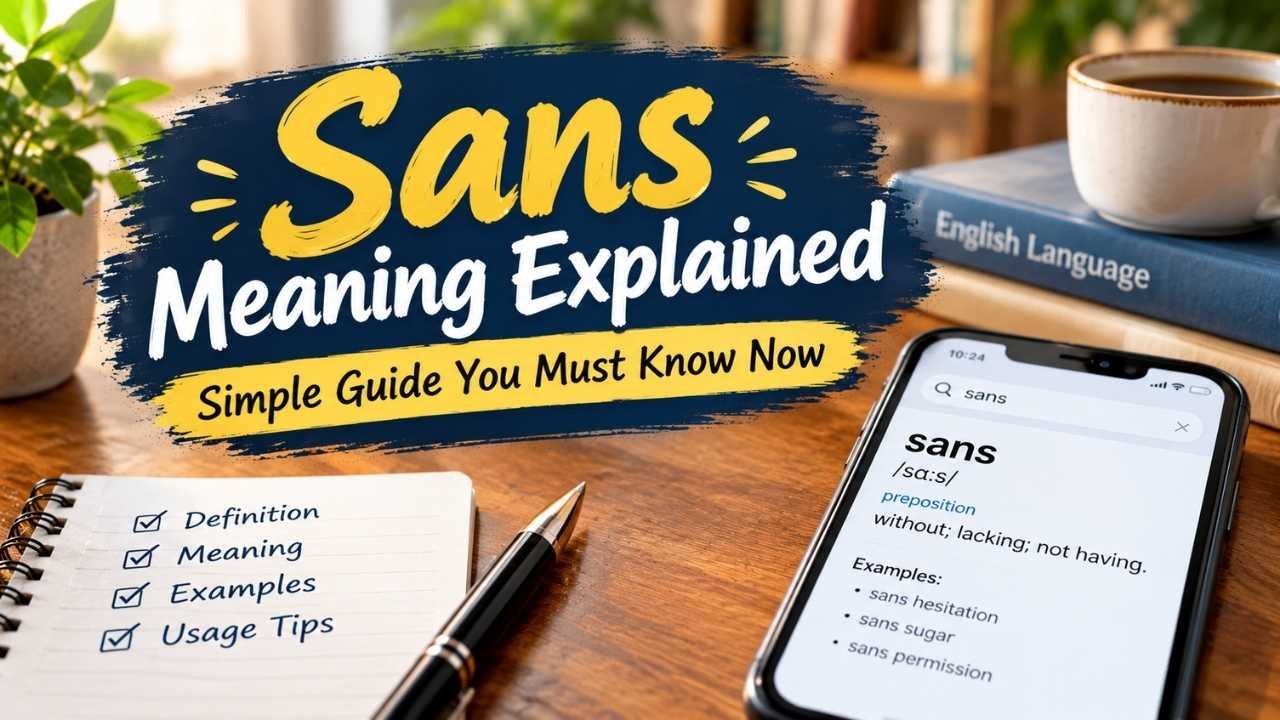
Have you ever seen the word sans in a book, headline, menu, or online post and wondered, “What does sans mean?” You’re not alone. Sans meaning is simple, but many people are unsure how and when to use it correctly.
In English, sans is a borrowed French word that means “without.” Although it is less common than the word without, you will still find it in writing, literature, branding, and even sans-serif typography. Understanding the meaning of sans, its origin, and its usage can make your vocabulary stronger and help you recognize it in different contexts.
In this guide, you’ll learn the definition of sans, how to use it in everyday English, common sentence examples, its pronunciation, and the difference between sans vs. without in clear, easy-to-follow language.
Quick Answer
Sans is a French word that means “without.” In English, it is used as a preposition to describe the absence of something. For example, “coffee sans sugar” means coffee without sugar. Although sans is less common than without, it often appears in literature, journalism, branding, and everyday expressions. Knowing the sans meaning helps you understand and use this word correctly in different situations.
What Does Sans Mean?
The sans meaning is very simple. Sans is a French word that means “without.” In English, it works as a preposition to show that something is missing or absent. For example, if someone says “coffee sans sugar,” they mean coffee without sugar.
While the word without is much more common, sans is often used to add a stylish or literary touch to a sentence. You may also see it in newspapers, magazines, advertisements, and books. Understanding what does sans mean helps you recognize the word whenever you come across it.
If you enjoy learning the deeper meanings behind words and symbols, you might also like reading about Flamingo Symbolism in the Bible .
The Simple Definition of Sans
The definition of sans is simply “without.” It entered the English language from French and has been used for many years. Although it is not an everyday word for most people, it still appears in many forms of writing, especially when authors want a short or elegant way to say without.
The meaning of sans does not change based on context, but its tone can. It often sounds more formal, creative, or playful than the word without.
You may also notice sans in product names, headlines, and design terms like sans-serif. Learning words like this expands your vocabulary and makes reading easier because you’ll understand expressions that may seem unfamiliar at first.
Where Does the Word Sans Come From?
The origin of sans goes back to the French language, where it has long meant “without.” Over time, English borrowed the word, just as it borrowed many other French expressions. This process is common because languages naturally influence one another.
Today, sans is mainly used in books, articles, advertisements, and creative writing instead of everyday conversation. Its etymology shows how languages evolve by adopting useful words from different cultures.
Even though the word is French, many English speakers understand its meaning because it has become part of modern vocabulary. Just as words carry history, symbols often carry deeper meanings. If that interests you, the article about Red-Shouldered Hawk Symbolism offers another fascinating example of how meanings develop over time.
How to Pronounce Sans Correctly
Knowing the pronunciation of sans makes it easier to use the word with confidence. In English, it is usually pronounced “sanz,” with the final s sounding like the letter z. The pronunciation stays close to its French roots while fitting naturally into English speech. Since sans is a short word, it is easy to remember once you hear it a few times.
You do not need a special accent to say it correctly. Whether you are speaking casually or reading aloud, using the correct pronunciation helps others understand you. Learning both the meaning of sans and its pronunciation allows you to use the word naturally whenever you see it in books, articles, or conversations.
How Is Sans Used in English?
The usage of sans is straightforward because it simply means “without.” You will often find it in English writing, headlines, advertisements, menus, and creative content. Writers sometimes choose sans instead of without because it sounds shorter, stylish, or more expressive.
For example, “pizza sans cheese” means pizza without cheese, while “a life sans worry” means a life without worry. Although the word appears in modern English, it is less common in everyday conversation.
It works best when the meaning is clear from the sentence. Understanding how to use sans correctly helps improve your vocabulary and lets you recognize this borrowed French word wherever it appears.
Common Examples of Sans in Everyday Sentences
Seeing sans in real sentences is one of the easiest ways to remember its meaning. Here are a few simple examples: “She ordered coffee sans milk,” “The hotel served breakfast sans eggs,” and “He completed the project sans help.” In each example, sans simply means without.
You may also see phrases like “sans makeup,” “sans jacket,” or “sans decorations.” These expressions sound a little more creative than using without, which is why many writers enjoy using them. Reading sentence examples helps you understand the sans meaning in English and shows how the word fits naturally into different situations.
Sans vs. Without: What’s the Difference?
Many people wonder about sans vs. without because both words have the same basic meaning. The biggest difference is in their style. Without is the standard word used in daily conversations, school, business, and formal writing. Sans, however, is more common in creative writing, headlines, advertising, and literary works.
It gives a sentence a unique or elegant feel. For example, saying “coffee without sugar” is more common than “coffee sans sugar,” but both are correct. If you are writing for a general audience, without is usually the safer choice. Use sans when you want to add variety or a slightly artistic touch to your writing.
Is Sans Formal or Informal?
Sans sits somewhere between formal and informal English. It is not a slang word, but it is also not used in most everyday conversations. Instead, it often appears in books, magazines, newspapers, and marketing content where writers want a shorter or more stylish expression.
In professional or academic writing, without is usually the better choice because it is familiar to all readers. However, sans works well when the audience understands its meaning and the context is clear.
Knowing when to use sans helps you communicate naturally while keeping your writing easy to understand. The key is to choose the word that best matches your audience and purpose.
When Should You Use Sans?
You should use sans when you want to say “without” in a creative, simple, or eye-catching way. It is commonly used in headlines, advertisements, menus, fashion, and creative writing. For example, phrases like “traveling sans luggage” or “coffee sans cream” are short and memorable.
However, avoid overusing the word because it may sound unusual if repeated too often. In everyday conversations, without is still the most natural option. A good rule is to use sans only when it improves the flow or style of your sentence. This keeps your writing clear while adding a little variety and personality.
When Should You Avoid Using Sans?
Although sans is a useful word, there are times when you should avoid it. If you are writing a school assignment, business report, legal document, or any formal communication, without is usually the better choice. Some readers may not be familiar with sans, so using it too often can make your writing less clear.
It is also best to avoid sans if it feels forced or does not match the tone of your content. Always think about your audience before choosing the word. Clear communication is more important than sounding creative, so use sans only when it fits naturally within the sentence.
Common Mistakes People Make When Using Sans
One common mistake is thinking that sans has a different meaning than without. In reality, both words express the same idea. Another mistake is using sans in every sentence, which can make writing feel unnatural. Some people also confuse sans with sans-serif, but these are different terms.
Sans-serif refers to a style of font, while sans simply means without. Others may spell or pronounce the word incorrectly because of its French origin. The easiest way to avoid mistakes is to remember that sans is a simple substitute for without and should only be used when it sounds natural in the sentence.
Sans in Literature, Journalism, and Modern Writing
The word sans appears in many forms of literature, journalism, and modern writing because it creates a clean and stylish effect. Authors often use it to make dialogue or descriptions sound more expressive, while journalists may include it in headlines to save space. Advertisers also like the word because it is short, memorable, and catches attention.
In modern media, you may even see sans on social media posts, blogs, and product descriptions. Although it is not an everyday word, it continues to remain popular in creative writing. Its simple meaning and elegant style help explain why sans has stayed relevant for so many years.
Sans in Typography: What Does Sans-Serif Mean?
You may have heard the term sans-serif while choosing fonts for a document or website. In typography, sans still means “without.” A sans-serif font is a typeface without the small decorative lines, called serifs, at the ends of letters. Popular fonts like Arial, Calibri, and Helvetica are all sans-serif fonts.
These fonts are popular because they look clean, modern, and easy to read on screens. Although sans-serif includes the word sans, it belongs to the world of design rather than grammar. Understanding this difference helps prevent confusion when you see the word used in different contexts.
FAQs
What does sans mean?
Sans is a French word that means “without.” In English, it is used as a preposition to show that something is missing or absent. Although without is more common, sans often appears in books, advertisements, headlines, and creative writing.
Is sans an English word?
Yes. While sans comes from French, it has become part of the English language. Many writers use it in literature, journalism, and everyday expressions to add style or variety to their writing.
Can I use sans in everyday conversation?
Yes, but it is not very common. Most people prefer the word without in daily conversations. Sans is usually used when someone wants their sentence to sound more creative or elegant.
What is the difference between sans and without?
Both words have the same meaning. Without is the standard choice for everyday and formal English, while sans is more common in creative writing, headlines, and branding because it sounds shorter and more stylish.
What does sans-serif mean?
Sans-serif is a typography term. It describes a font that is without the small decorative lines called serifs. Popular sans-serif fonts include Arial, Helvetica, and Calibri.
Is sans still used today?
Yes. Although it is less common than without, sans is still widely used in books, magazines, advertising, blogs, and graphic design. It remains a useful word when writers want a clean and concise style.
Conclusion
Understanding the sans meaning is easier than many people think. The word sans simply means “without,” and it comes from the French language. Today, it is used in English writing, literature, journalism, branding, and typography, making it a useful word to recognize.
Knowing how to use sans, when to choose it instead of without, and how it appears in terms like sans-serif will improve both your reading and writing skills. While without is the better choice for most everyday conversations, sans can add style when used naturally.
If you enjoy exploring the meanings behind words and symbols, you may also like reading about Flamingo Symbolism in the Bible and Red-Shouldered Hawk Symbolism for more fascinating insights.
3 thoughts on “Sans Meaning Explained Simple Guide You Must Know Now ”